Thursday, October 13, 2011

Music In Your Home School?

Music training dramatically improves the verbal intelligence of young children. Does this surprise you?

"Children between the ages of 4-6 ... showed significant cognitive gains after only 20 days of training on interactive, music-based cognitive training cartoons. These results were confirmed by imaging data which indicated that brain changes had taken place following the exercises."

If you are not incorporating music education into your homeschool, you may want to give it a try.

Tuesday, September 27, 2011

Can students who attend public school use HomeSchool Advantage?

We received the following question today:

"Can students that attend public school do this?
And how would they get started for say 9th grade?"

First, thanks for asking about HomeSchool Advantage!

Yes, our system should be valuable to almost any grade school or high school student, regardless of whether they homeschool or attend private schools or public schools. Moreover, in our experience, any given student could benefit from at least a couple of our subject areas.

To get an idea of the courses we have available, take a look at the course listing, which is available from our home page. For a really detailed look at the facts in all of those courses, we would encourage you to sign up for one of our free trial subscriptions. Once you have done so, you can see not only all of the courses, but all of the facts, images and sound clips which go into those courses.

Regarding what to assign for a ninth grade student, I can make a few recommendations. First, I would suggest assigning some courses from Geography. Many students are woefully ignorant of the names and places covered in those courses. Quiz your student a little and see if he or she knows the names of the U.S. States and Canadian provinces. If not, you should assign the courses for those topics. And I would be very surprised if your student knew the names of more than a handful of countries on any of the continents. Assign some more courses based on what you find.

In History, I would recommend at least the U.S Presidents course (if you are American) or the Canadian Prime Ministers course (if you are Canadian). These courses, together with the other history courses, provide a very useful foundation for learning more history.

In Social Studies, I would recommend the courses on the U.S. government (if you are American) or the Canadian government (if you are Canadian).

Unless your student is an unusually strong speller, you might consider whether some of the upper level Spelling courses might be helpful.

Finally, I would strongly recommend the Vocabulary Building and SAT/GRE Prep subjects to improve your student's vocabulary, which is an absolutely critical part of one's education, regardless of what one is going to do.

Depending on your other goals, some of the other courses may also be valuable.

We are continually adding more subjects to our catalog, so it's always a good idea to take a look at what is available every so often.

Monday, July 18, 2011

Do You Still Need To Learn Things?

Occasionally we read an article that says we no longer need to learn things because we can quickly and easily look them up on Google. Scientists are now studying the impact of tools like Google on human knowledge. They are now talking about how people learn to optimize their intellectual energy expenditures in the presence of Google, i.e., adapting their behavior to make better use of a situation.

If I no longer need to remember as many things because they are so easy to look up, it is important to note that my brain and time resources that are freed-up are not necessarily being put to better use.

It may be true that I technically don't need to be able to do long-division because I have a calculator now, and I don't need to remember dates because my iPhone calendar does, and I don't need to remember anything else because Google can find it for me. What this argument doesn't address is the time-cost. Using a calculator clearly saves time over long-division by hand, because machines will always be faster at arithmetic. However, actually remembering how to approach solving a complex equation, knowing the meaning of a word, or the relationship of two historical figures, or the difference between Canada's and the U.S.'s government structures, saves a lot of time compared to the effort of 1) getting to a computer, 2) formulating a query, 3) sifting the results for the answer, 4) repeating steps 2 and 3 until you get the answer.

While research will sort this all out sometime this century, we suggest you still focus your home school students on actually learning things.

Friday, April 15, 2011

New HomePage Design Coming This Weekend

We hope to launch a new homepage design this weekend. We have:
  • made it easier for parents to see the Price, Support, and FAQs pages.
  • placed our feature video on the front page
  • generated the course catalog automatically
  • provide detailed views of some courses in the course catalog
The Parent and Student Login buttons are now in the upper right corner of the page.

We hope this new design makes it easier for parents and students to learn about our system and to find answers to their questions. Let us know what you think.

Thursday, February 10, 2011

Make Mistakes Faster -- Bad Advice?

We received a message today from a very proficient drummer who got that way by practicing very hard. He has found that for drumming if he goes as slow as he needs to, in order to do it right, that eventually he will do it real well and, in time, the speed will come!

He totally disagreed with our "Make Mistakes Faster" advice for students learning using HomeSchoolAdvantage.

I fully appreciate where he is coming from, but we are talking about practicing two different skills. Going slow with a musical instrument (or in many sports) is about trying to find the correct answer that is a function of your own personal muscle control, nerve speed, and cognitive control. In playing the drums, you go slow to find the correct answer to begin with, the correct answer cannot be told to you, you must discover it. Then you work to increase speed. You don't want to practice the wrong thing. We have no problem with that approach.

HomeSchoolAdvantage is not about playing a musical instrument or a sport, it is about academics. We are not practicing muscle control as a function of our own nerve speed and cognitive programming. HomeSchoolAdvantage is entirely about what is going on inside your head, specifically when the student is accumulating new facts. We can tell you the right answer to a fact, is does not have to be personally discovered.

HomeSchoolAdvantage as a system is the equivalent of fact flash cards, we prompt the students' memory to recall the facts, and then move on. If we use the drumming approach to teach the fact "7 + 5 = 12" we would be doing the student a terrible disservice. We would never advise you to ask the student during drilling on basic math skills to go slowly and "figure it out."

If the student has fingers, they will be able to figure it out.

The very purpose of going fast is to try to prevent them from figuring the answer out, it is a core fact, we want them to know it instantly. Our friend may believe he is having success with his drumming approach to academics because the student will be able to produce the correct answer, 12.

"Ah ha, you say. I knew Tom was wrong. Look, by giving them more time and going slowly they got the correct answer."

The problem is, and you only discover this by interviewing the students, is that you are teaching them to practice doing extra steps inside their head to get that answer. And practice does not make perfect, it makes permanent. The same reason you only want to practice going slowly with drums is you want them to practice only the right things, not the wrong things. We want the same thing academically, the right thing is to instantly know (without additional thought) that 7 + 5 = 12.

If a student is encouraged to go really slow learning a fact like "7 + 5 = 12" it will probably work! Because they are able to answer it correctly by counting on their fingers or doing the equivalent of counting on their fingers mentally (counting points around the 5 or the 7). Their technique will work! You will be proven correct! At least you think you will. But in fact, they have simply developed bad cognitive habits that will follow them the rest of their lives. They will get the correct answer, but they will actually lose the ability to know that "7 + 5 = 12" instantly. Going slow answering "7 + 5 = 12" is like practicing incorrect drum technique. Perhaps we really agree with the drummer after all. We are interested in practicing "instant recall."

This is just one reason why I do not encourage students to follow the drummer's advice while learning new facts. There is another reason. A researcher who has studied these techniques for almost 30 years computationally has tracked tens of thousands of students learning millions and millions of facts. He publishes his results. He has found that a recall failure rate as high as 20% may be optimal for learning more material. Try to recall everything at or near 100% and your dramatically decrease the overall learning rate. My advice on how to learn more facts-- better and faster--is backed up by millions and millions of data points. The era of opinion in these matters is now over. Long live research. If the student's goal is to accumulate basic core knowledge then mistakes (forgetting) are to be encourage and not punished. Forgetting is the core of being human. Embrace it, do not resist it. Eventually the student will learn that "7 + 5 = 12." When they do, they will know it instantly and innately. Note, I am not talking about the concept of addition, I am talking about the fact "7 + 5 = 12."

The drummer's approach may be absolutely 100% correct for learning drums, and piano, and probably even baseball. We do not claim to be experts on these techniques, although we invite those experts to join the conversation. Those skills are fundamentally different from learning and remembering the multiplication tables, or any of tens of thousands of facts a student may wish to learn and instantly recall.

If you want to do everything slowly and perfectly the first time, our system is probably not for you. Although it probably could work. If you want to be able to recall instantly thousands and thousands of fact and be absolutely brilliant compared to most students graduating from High School today, then join us and learn. Oh, and make lots and lots of mistakes.

Wednesday, February 9, 2011

Periodic Table Comment

Homeschool advantage contains the following fact:

In the Periodic Table the elements are placed in increasing order of their Atomic Number.

One of our older students submitted the following comment:

"I wrote atomic weight on this answer. I believe I am
correct. If I am not please let me know but I will check it
out myself."

The statement "The atomic weight increases with the atomic number" is not universally true. In fact the history of chemistry shows a great deal of argument about the proper order of elements in the periodic table. The situation is greatly complicated by the existence of isotopes, which are versions of the same element (i.e. atoms having same number of protons but varying numbers of neutrons). The isotopes have the same atomic number, but different atomic weights. Also, the different isotopes have different abundances so that one isotope might be more abundant than another. The accepted atomic weight shown in the periodic table is basically a weighted average of the atomic weights of the various naturally-occurring isotopes times their respective abundances.

The result is that sometimes, order by atomic weights is not the same as the order by atomic number. For example, if you look on this periodic table of the elements, you will see that Argon (Ar) and Potassium are in order according to atomic number but backwards according to atomic weight:

Element Symbol Atomic # Atomic Wt.
Argon Ar 18 39.948
Potassium K 19 39.098

Atomic number can be exactly measured using several different techniques and always comes out the same. Atomic weight, on the other hand, is a function of the purity of the sample and sometimes even where it came from in the world.

Reality is always so much messier than we would like it to be.

Friday, February 4, 2011

Your Private Tutor

People frequently ask us if we are a complete curriculum. The answer is no. We are an automated private-tutor providing customized worksheets for your students. These worksheets are taken on-line, so we can record each student's results and predict his or her future performance. We are supplemental to your primary curriculum.

We are quick and to the point, so as not to waste the student's time. We have thousands of graphics and illustrations but they are not to entertain, but to inform. The goal is to get the core facts taught and reviewed as quickly as possible. We only provide our worksheets on-line in order to remember every correct and incorrect answer. We use this knowledge to predict what the student is most likely to forget next and to craft a highly personalized worksheet.

We do award trophies as students progress through the system in order to mark progress. These trophies are displayed in the student's trophy room and provide motivation and a little entertainment. We are not edutainment. We are more like an intelligent flash card.

Student forget 80% or more of what they learn in just 30 days, with us as their tutor they can retain and recall it all.

We tutor on tens of thousands of facts covering Geography, History, Math, Science, Social Studies, Spanish, Spelling, and Vocabulary. Worksheets are customized for each specific student on each specific day, customized based on what is assigned and on what the student is most likely to forget without immediate review.

A few very narrowly focused subjects such as spelling are covered so completely that no additional curriculum is required.

We provide detailed daily status reports to track progress, and even generate detailed transcripts listing everything the students have learned.

A white-paper called "Seven Secretes to Creating Brilliant Students" describes our research-supported approach to knowledge retention and recall, it is free: http://www.homeschooladvantage.com/info_pages/iview/About

A video on our service, what it is and what is does, may make things more clear. We offer a free trial: http://vimeo.com/15209592

Thursday, February 3, 2011

See When a Trophy Was Awarded

I received a call today from a Mother who wanted to award prizes when her students earned trophies. Her question was, "Is there a way to see when a trophy or ribbon was awarded?"


The answer is yes. Hover over a trophy with your mouse, and the course name and the date it was awarded will be displayed.

The most recently awarded award date will be displayed on the far right.


Transcripts

Parents have asked us if HomeSchool Advantage offers transcripts.
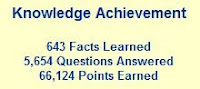
Over the holidays we added a feature that we hope will meet your transcript needs.

The students' Trophy Room can now display a detailed transcript of everything the student has seen.

On the upper right corner of the Trophy Room the students can select to see the "details" of the Trophy Room.

The details provide a detailed transcript of every subject the student has seen and every fact in that subject, plus the facts' Mastery Level captured in stars.

We include the number of facts learned and the number of questions answered for each subject.

This transcript may be printed and placed in a binder to capture all of the work the student has done in HomeSchool Advantage. Creating a detailed and very exact transcript of everything that was learned.


Tuesday, February 1, 2011

Multiple Assignments in the Same Subject

A user wrote the following question today:

Both of my students today, ran across a message that they didn't have any more questions and the parent needs to assign more lessons... if I go ahead and check several assignments, will that pull questions from all those assignments on any given day or does the computer generate questions only from the first assignment then when that's completed, moves on to the next assignment? If it's the latter, then I can go in and check all of the assignments so there won't be any down time/gaps.

Thanks, LB

Our answer:

It is the latter. You may assign several course at once from the same subject.
It will only give the students new facts from the lowest numbered course
you have assigned in a subject. So yes, you can go in and check all of the assignments
so there won't be any down time/gaps.

Sunday, January 30, 2011

Database Cleanup Today

A few of our students (about 30) had extra copies of some facts in their workbooks. Each fact should only be in a workbook once.

These duplicates were caused by two old bugs which we fixed a while ago. We doubt if anyone will notice, but it's possible that some of our high-end, power users may notice that the number of facts listed on the trophy statistics page will have gone down a few facts.

Thursday, December 9, 2010

Improved Review Schedule

We made an important change to HomeSchoolAdvantage this morning. We improved the review schedule for when to quiz a student on a fact.

We found that as facts moved into higher mastery levels students were forgetting them too frequently. So, we added more reviews into our review schedule and we adjusted the spacing between reviews.

We added more boxes to the Rate A Fact widget to reflect the additional reviews in the new schedule. We also changed the popup microhelp strings for the Rate A Fact widget.

Hopefully, students will not notice the change at all. They will simply find it easier to learn new facts over time.

Logging In Bug Report

We made some changes last night to HomeSchoolAdvantage and unfortunately the STUDENTS login button currently incorretly leads to the PARENTS login page.

Your students can still login from the parents page, so have them login with their student account from the parents page until we get the button fixed.

They will see their normal student account once they login.

Wednesday, November 24, 2010

Problems with Slow Networks

Some of our users with satellite networks or slow networks in remote locations were experiencing strange problems with HomeSchoolAdvantage. These problems were caused because your network providers were not actually displaying to you the web pages we were sending you. We have made a few changes to trick your network providers into actually displaying to you the web pages we have been sending you. The net result, those of you with satellite or otherwise slow networks should now have a better experience operating HomeSchoolAdvantage.

Please let us know whenever you have problems with HomeSchoolAdvantage. It was two users working closely with us that allowed us to figure out that some of your internet service providers were not actually displaying the web pages we were sending you. :-( Those who had this problem with us, likely experience bad behavior on many other websites as well.

Tuesday, November 23, 2010

Two New User Features

We have released two new features in HomeSchool Advantage today. These are important changes that homeschool parents have specifically requested.

Parents now have two new settings for each student:

Setting #1: Worksheet Size Limit
Setting #2: Allow Fill-in-the-Blank Questions

Worksheet Size Limit

Up until today, we allowed a student's daily worksheets to grow to an unlimited size. This can be a problem if the student has been on vacation or only uses the system occasionally. You may now set a maximum size for the daily worksheet to be as small as 25 questions. This limits the size of the worksheet for each subject.

If you set the limit to 25 questions, the Spelling Worksheet could be up to 25 questions, the History Worksheet could be up to 25 questions, the Vocabulary Worksheet could be up to 25 questions, and so forth. No worksheet could be, say, 30 questions.

Consider limiting worksheet sizes for younger students and for students who have issues focusing for longer periods of time.

Allow Fill-in-the-Blank Questions


This option turns on fill-in-the-blank questions. If this option is not turned on, then we will not display a fill-in-the-blank question as long as there is an alternative available (True/False or Multiple Choice).

Spelling and some Math Drill courses will always use fill-in-the-blank questions because True/False or Multiple Choice display options are not available on these courses.

Turn on this option for students who can type and spell well, and who thus can quickly answer fill-in-the-blank questions.

Your Children's Settings

These new features have a default value which we automatically selected based on your students' ages. We suggest that you log in using your parent username and look at your students' settings to ensure they are what you desire. Click on "Edit" by each student to see and change these settings.

Monday, November 15, 2010

Making Memories Stronger

Dear HomeSchoolAdvantage,

My son John has a lot of trouble with retention of facts. He is doing very well with HomeSchoolAdvantage so far, however, history seems to be a real problem for him.

Concerned Parent

---

Dear Concerned,

Here are a few practical tips to help John create stronger memories when he studies history. Imagine that we show him the history fact “The Second President of the United States is John Adams.”

Tip#1: Have him write the fact down on paper.

Keep a notebook or journal by the computer. As we introduce a new history fact have him write it into the journal. While he is writing the fact down he should repeat it out loud three times.Writing the fact down and repeating it out loud helps make the memory stronger.

Tip #2: Have him research the fact.

After he writes the fact down, John should try to find out a little bit more about President John Adams. He could read a short one page biography of President John Adams in an age appropriate encyclopedia or even from the whitehouse.gov website. For the presidents you may wish to purchase a poster listing all of the presidents and have him find John Adams on the poster. Another fun way to research is to enter the phrase “President John Adams” in GoogleNews and read a current article that mentions the president.

Tip #3: Have him create his own questions about President John Adams.

Ask John to think of two or three additional questions about a new fact he is learning. What other questions does the fact inspire him to ask? Have him write his questions down in the journal too.

For example, questions I might ask aboout President John Adams include:

“Who what his vice president?”

“Where was he born?”

“What did he do after he was president?“

“Did he have any children?”

John's questions will be different, but they will be his questions. Sometime over the next few days John should try to find the answers to a few of his questions. He should write any answers he finds in his journal.

Make Memories Stronger

All three of these memory strengthening tips can be applied to everything John learns in HomeSchoolAdvantage. He can use these techniques all of the time, or just on subjects he finds especially interesting or difficult. If John starts doing all three of these techniques for a few weeks I think you will both be very happy with the results.

-Tom

Thursday, November 4, 2010

A Question about Adding Courses

Here is a question some of you may have as well.

-------------

Hi There,

I am a mother of one of the HomeSchool
Advantage students. I've been trying to add Dividing, as well as Muliplication to my son's Addition Math Course but it isn't adding it. Can you look into it for me?
-A HomeSchool Mom

------------


Thank you for your question.

For courses in the same subject (the same row in the assignments table) only one course will we presented to the student at a time. Once a student completes a course, they will progress to the next course in that subject.

For math courses, the lowest numbered assigned course will be presented to the student first. Then, when all of the facts in that course have been presented to the student once, the system will progress on to the next highest numbered course.

In any given subject, like Math, new facts are only presented to the student from one course at a time - the lowest numbered course. You may watch this video for a description: http://www.vimeo.com/14885600

Older students who are simply reviewing material they already may know can use the "Rate a Fact" feature to rate how well they know a more simple fact, like 2+8=10.

"Rate a Fact" is described in this video: http://www.vimeo.com/14880346

If they rate this fact highly, because they already know it quite well, then they can rapidly progress onto new course like subtraction, multiplication, and division.

Older student who are simply reviewing math facts they already know are encouraged to use the "Add More Facts" feature to quickly review and rate the facts (for example facts they may already know in addition), so the system can rapidly move forward to subtraction, and then to multiplication, and then to division.

Wednesday, November 3, 2010

New Course! Common Latin Phrases

We have added a new course on common Latin phrases.

Subject: Vocabulary Building
Course: 450 - Latin Phrases

Do you know what the following Latin phrases mean? ante bellum, carpe diem, caveat emptor, cum laude, ex post facto, habeas corpus

In our new course students will learn thirty-nine Latin phrases that are still in common usage. Even adults will be surprised by what some of these phrases actually mean.

This new course is Free to Members.


Monday, November 1, 2010

Time to Play?

I am continually reminded by the researchers about how our brains develop and change: http://www.newscientist.com/article/mg20827844.700-children-really-do-see-things-differently.html

One of our biggest concerns about the pressure to push younger and younger children into more and more formal academic activities is that perhaps we don't leave enough time for play.

Children need to spend hours and hours observing and interacting with the physical environment.

Playing outside and seeing the light reflect off of the trees, houses, ground and water. Playing with blocks and seeing shapes from different angles, seeing how the shapes stack, seeing how they interact. Playing with water and watching how it flows, how it carries a stick, and how it erodes the sand.

These are important activities for a young mind. I think we are only beginning to understand just how important they may be.

Thursday, October 28, 2010

How Many Days a Week?

A user recently asked if using the system 5 days a week, for every subject, was using it too much? Could the students get frustrated?

They asked the question because some of our marketing material describes benefits that can be received just using the system 5 minutes a day, 3 days a week. This type of minimal use is really for a student studying a single subject, like geography or spelling.

Using HomeSchool Advantage 5 days a week for every subject may be fine,
but it really depends on the student.

Ideally, for your own personal memory, it is best to use the system 5 days a week!

Frustration is the measure, however, that your students are trying to do too much.

If you have a lot of subjects introducing new facts all at once, the best strategy
would be to have the student use the system at multiple times during the day, so they do not get too many facts in one setting.

If a student is getting frustrated, try not to assign more than three new courses in different subjects at a time.

Assign, for example, North American Countries and Capitals, and the Greek Alphabet, and Spelling

Only assign a course in another subject, like US History, only after they have earned a trophy in North American Countries Capitals or the Greek Alphabet.

Another way to combat frustration is to have the student write each new fact
into a Journal the first time it is seen.

Then find a simply way to reinforce that fact. For example, in the case of Geography,
look the fact up on a globe and on a map.

Writing the fact down, and finding the country on a globe and on a map is great reinforcement. And it will help ward off overload and frustration.

I will be posting some more suggestions soon.